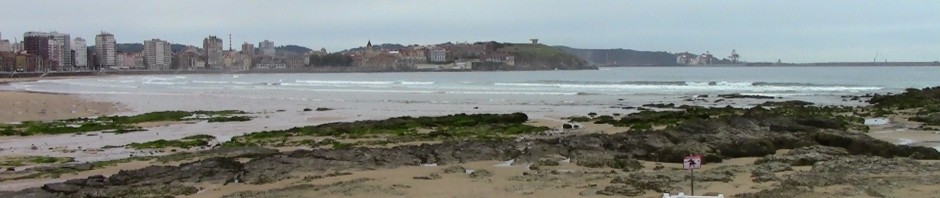
Last week, we travelled via small-gauge FEVE train from Gijón, Asturias, to Ferrol, Galicia, and back with main stops in Avilés, Cudillero, Pravia, Luarca, Navia, Castropol, Ribadeo, Foz, Burela, Viveiro, and Ortigueira. The views were amazing: industrial parks, rural greenery, coastal beaches, river towns, with oodles of forest, farmland, and mountain backdrops.
Here are a few photos as seen from the train, in Ribadeo (where we stopped for one night), and in Ferrol (where we spent the weekend). Ribadeo was a joy, overlooking the tranquil Eo river/estuary on the Asturian-Galician border, and Ferrol just as delightful: the port, Naval Museum, buildings of Rodolfo Ucha, Magdalena neighbourhood, and fabulous Meninas de Canido urban artworks.
With such high summer temperatures in most of Europe, the north of Spain is blissfully relaxing at under 25 C. And, of course, there is plenty of ever-yummy Galician food. We sampled a few: Bar La Queimada (Ribadeo), A Maruxaina (Ferrol port), and O’Galo (Ferrol town). Muchas gracias a quienes conocimos en el camino y a nuestros compañeros de viaje, Fernando y Isabel. Abrazos John y Belén
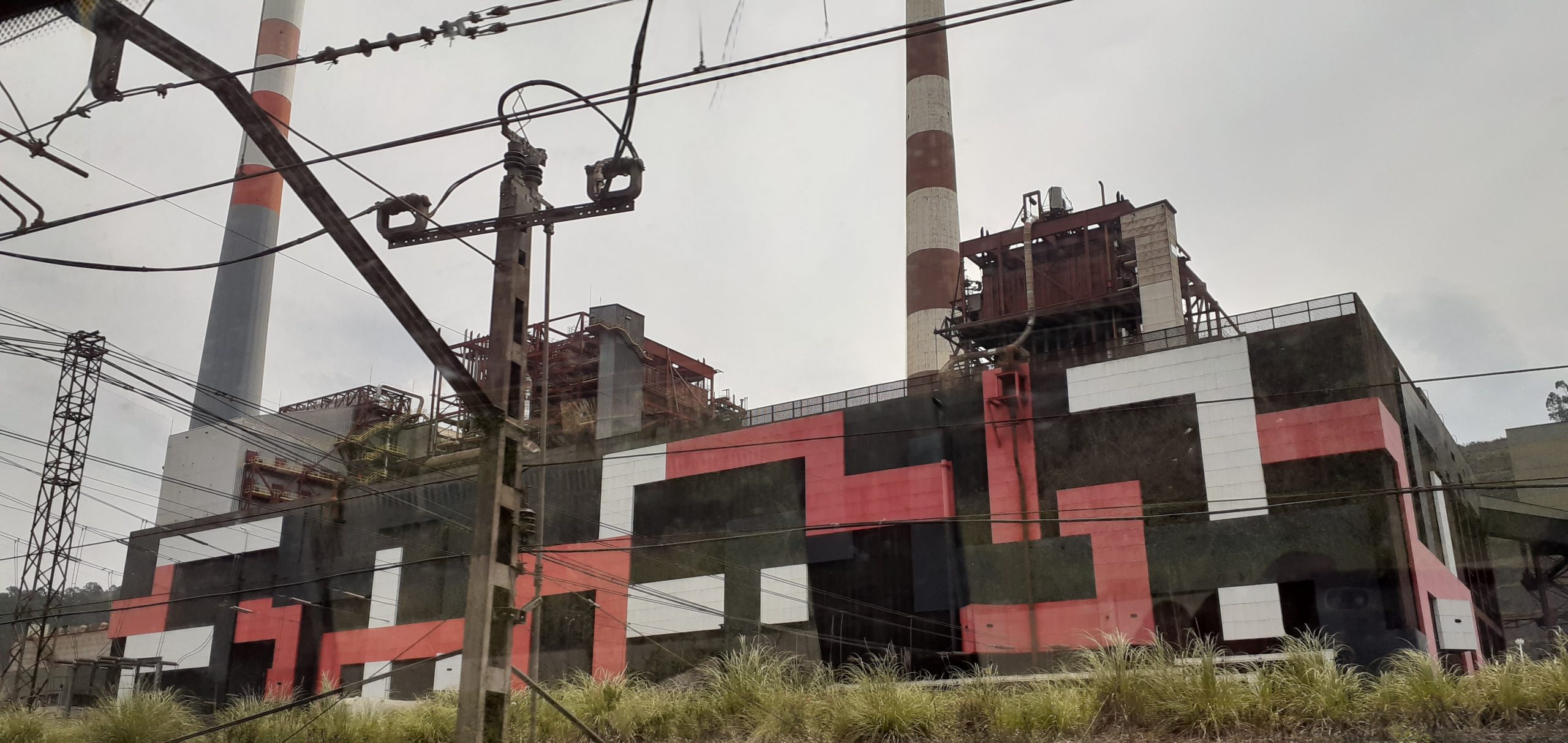
1. The 500-MW Aboño power plant, just outside Gijón aboard the Cercanías C-4 line to Pravia
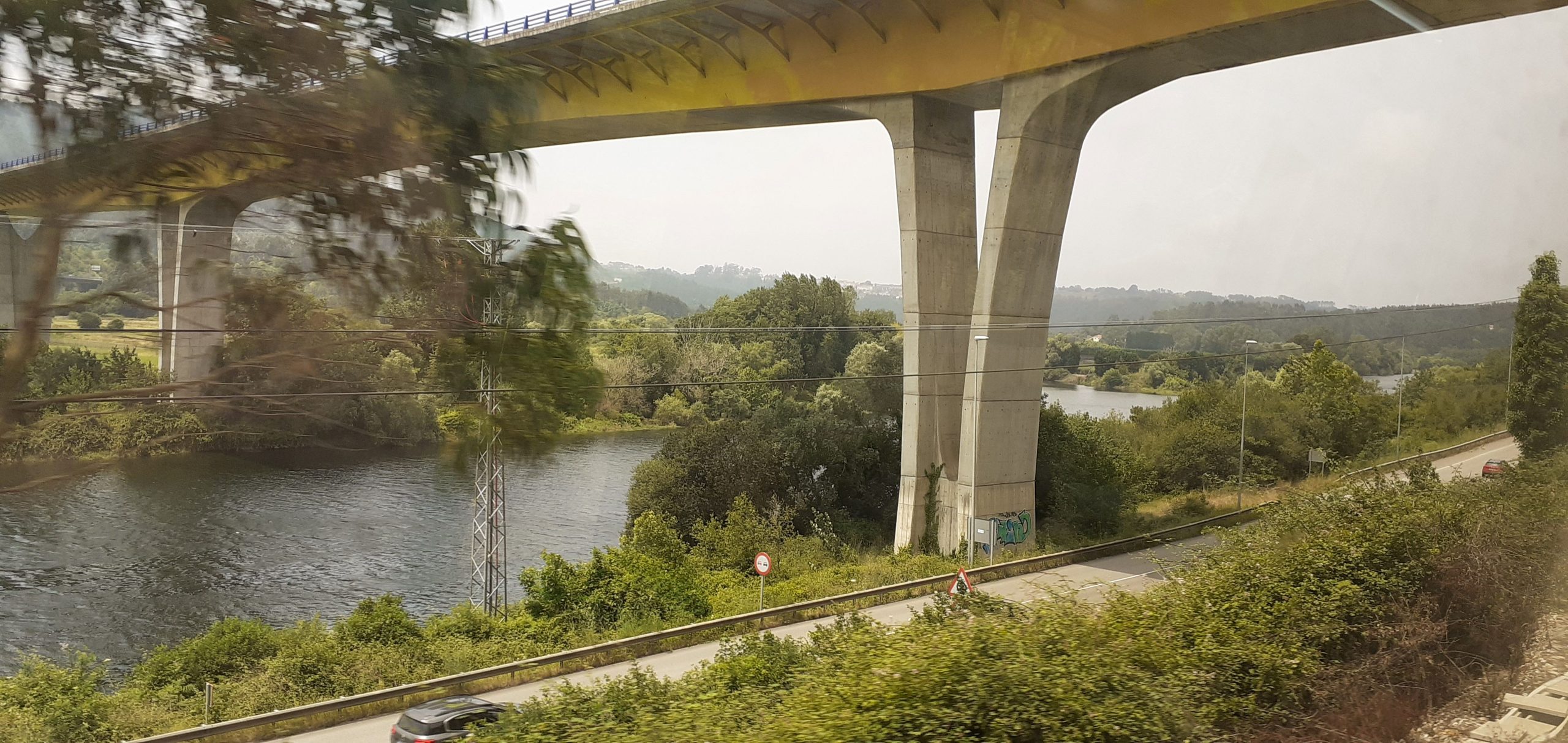
2. An A-8 Autovía del Cantábrico bridge near the airport
between Santiago del Monte and Piedras Blancas
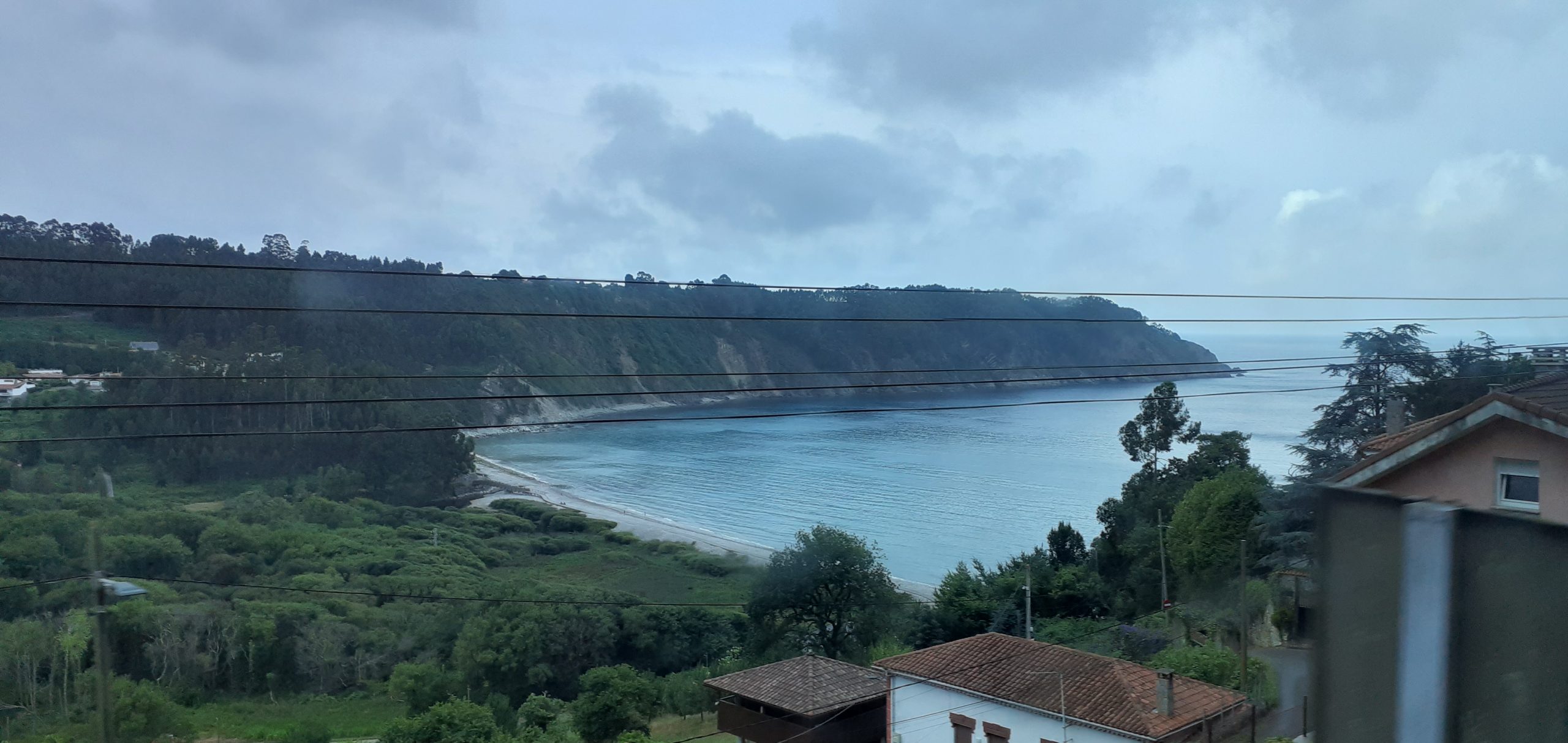
3. Overlooking el mar Cantábrico on the outskirts of Cudillero
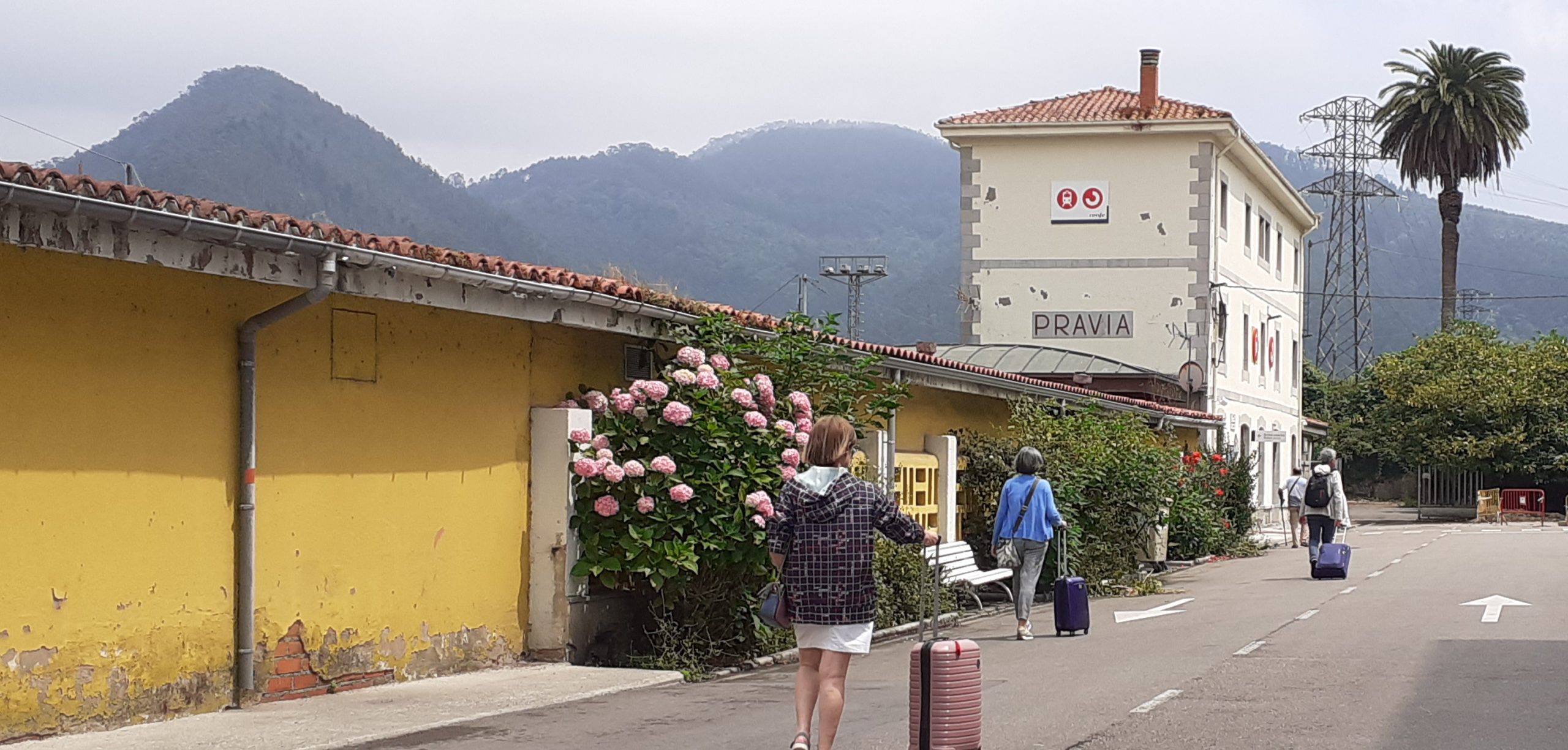
4. After a short coastal Cercanías trip from Gijón,
our intrepid travellers board the FEVE at Pravia
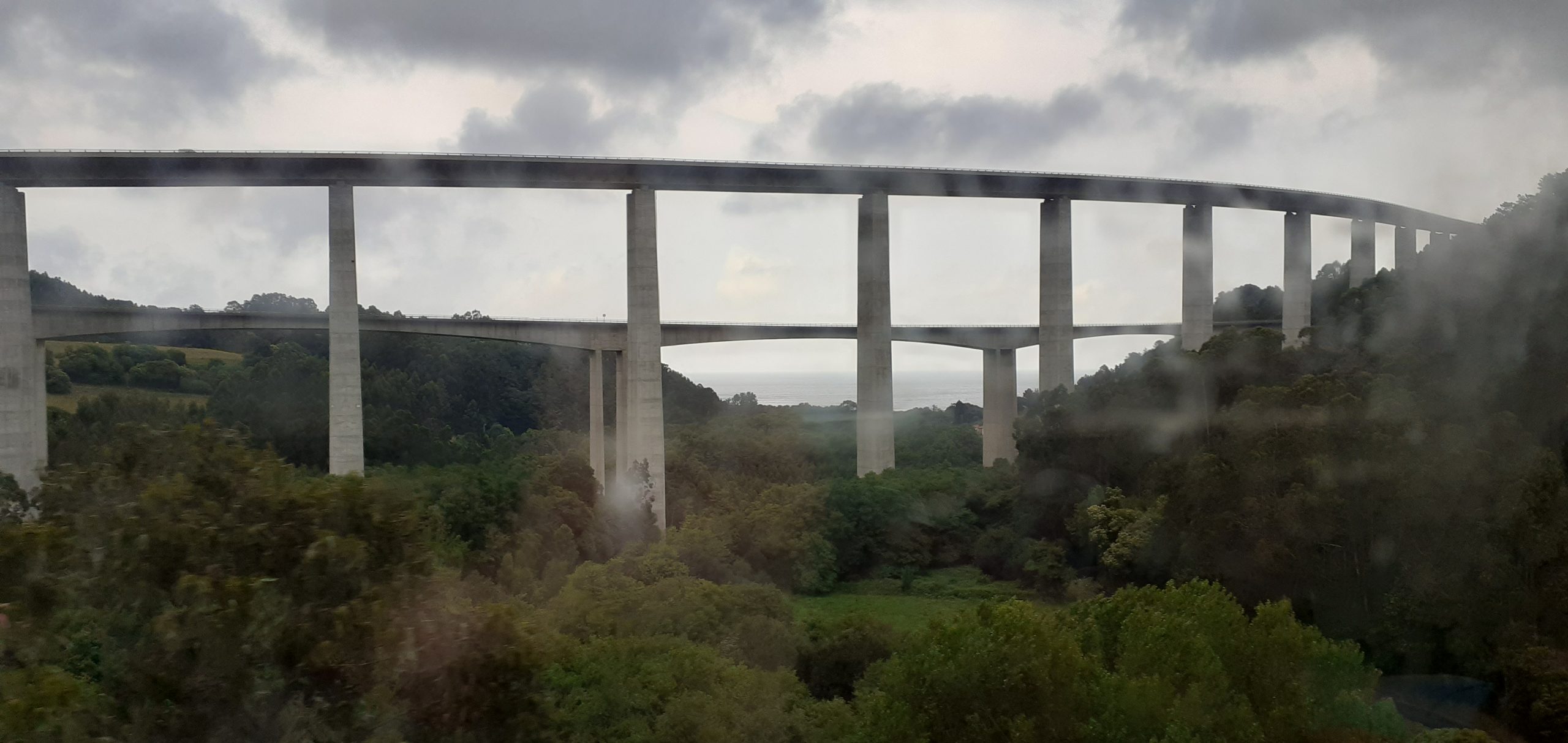
5. More A-8 viaducts in the lush green between Pravia and Cudillero
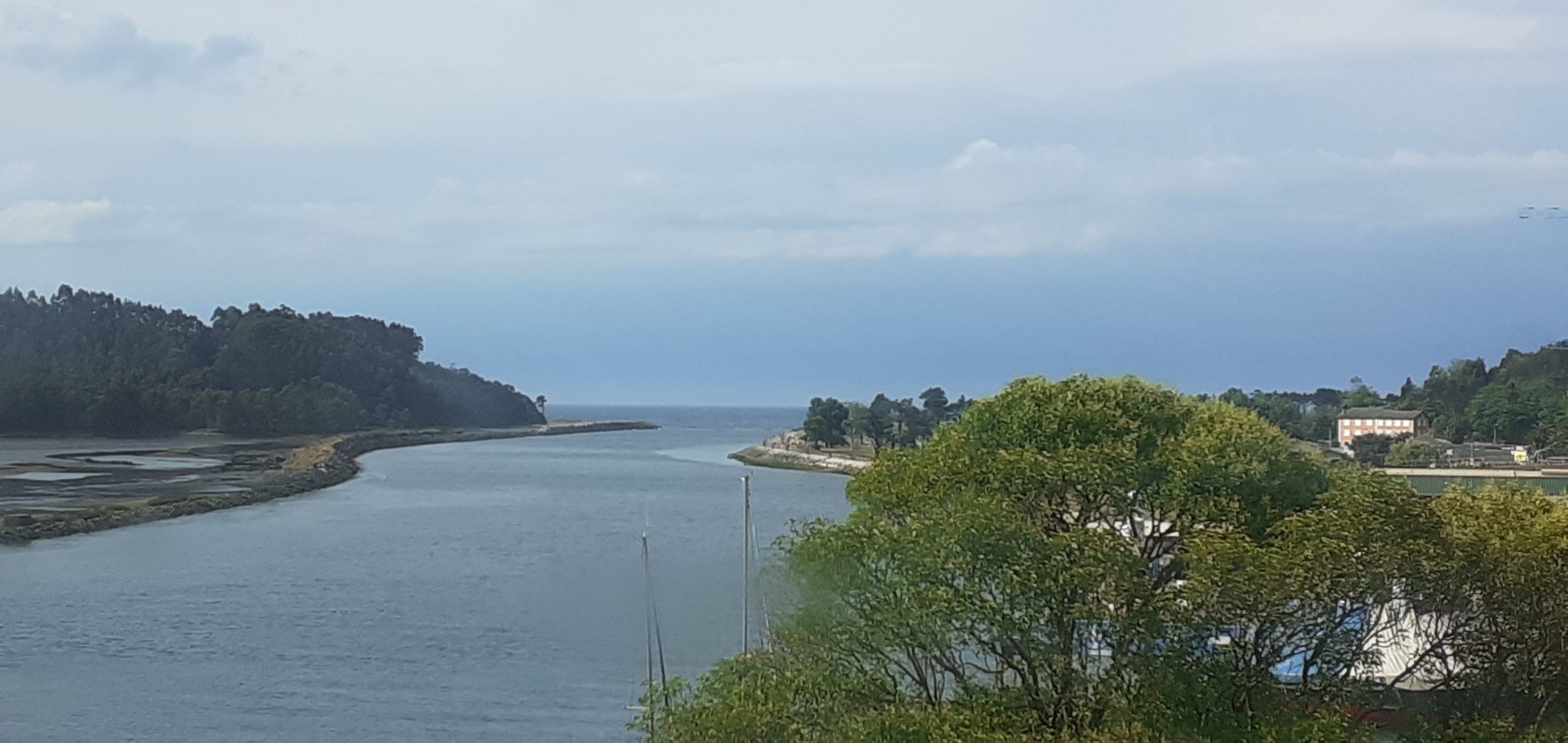
6. O tranquility overlooking the mouth of the river Navia
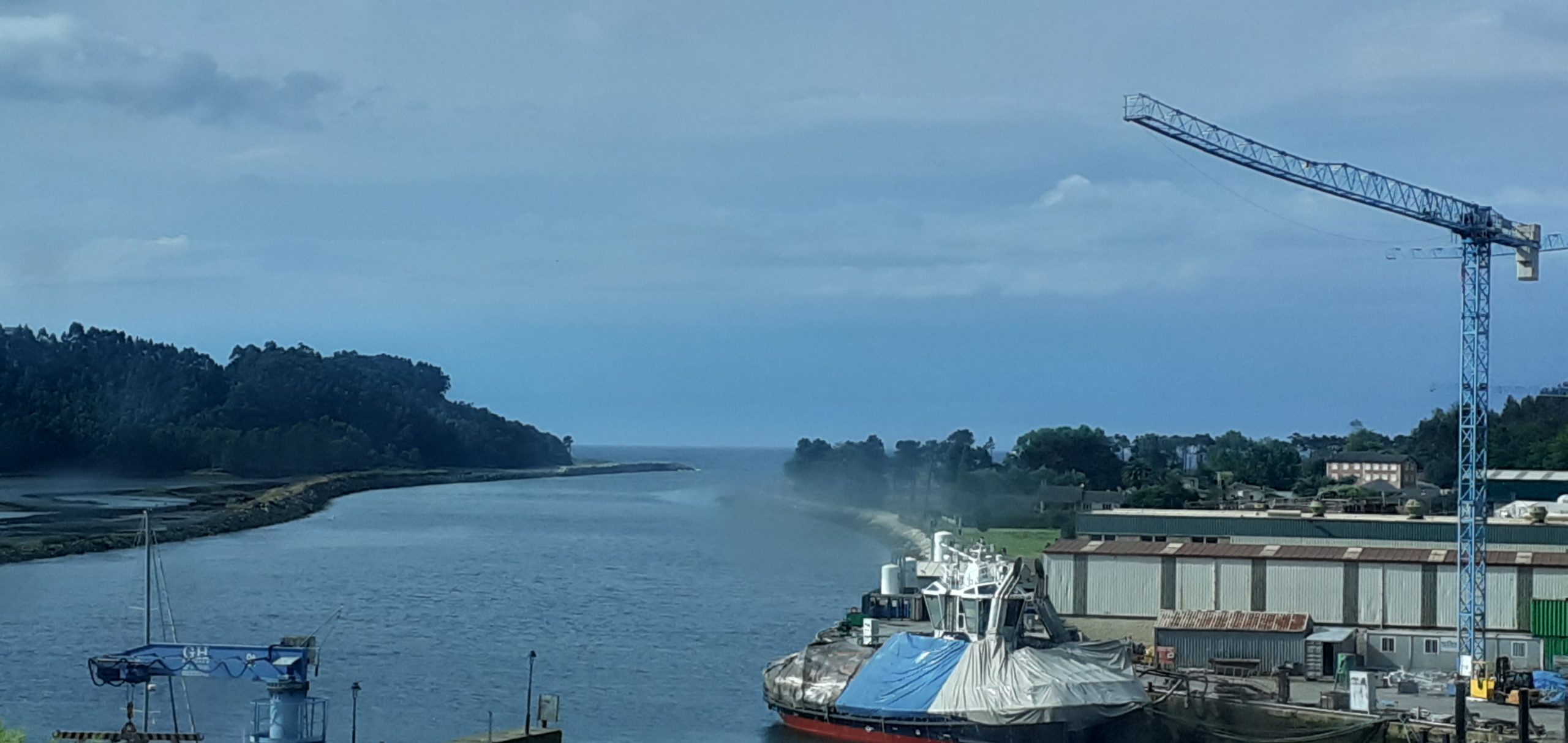
7. A moment later overlooking the mouth of the river Navia
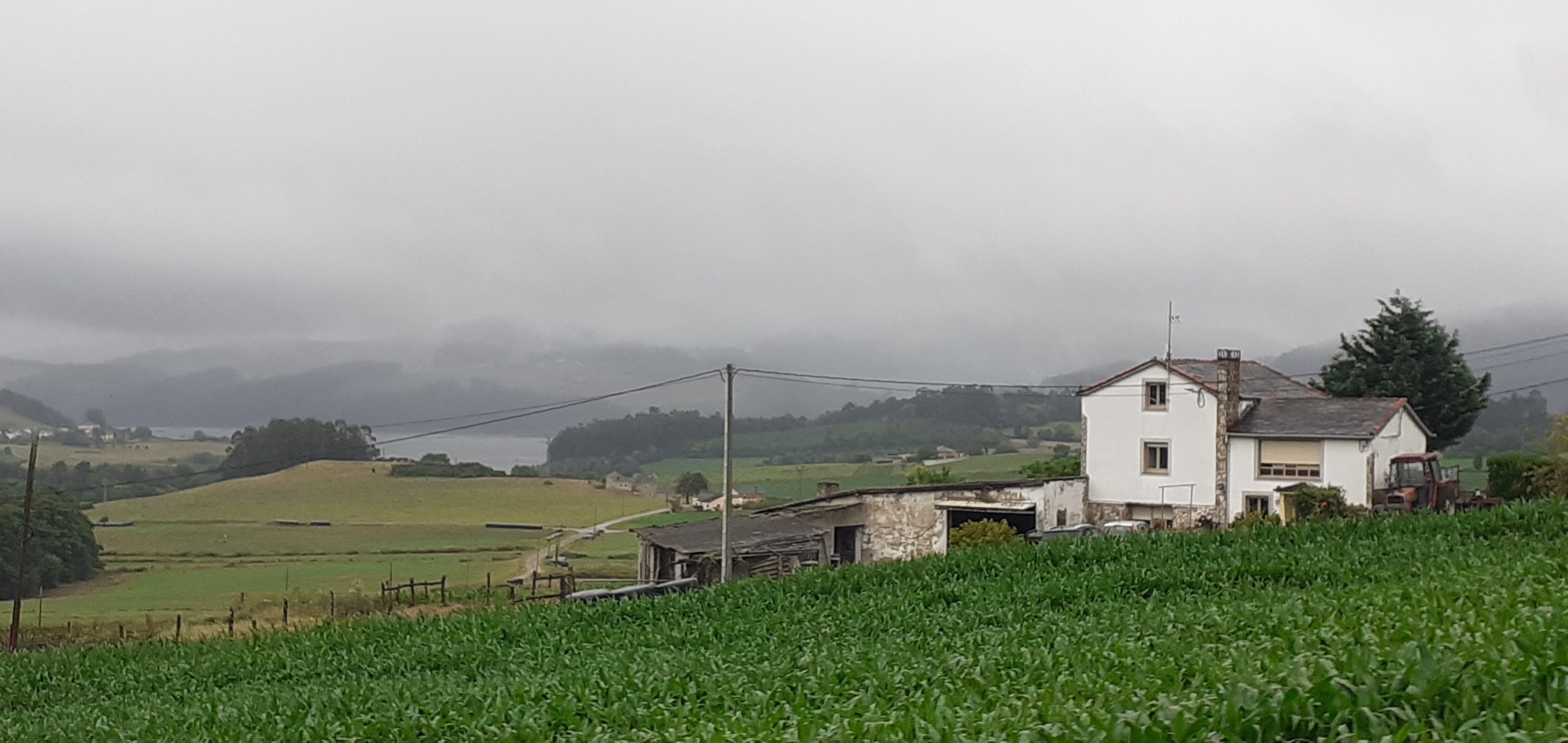
8. A quiet farmhouse in the luxurious Asturian interior near Castropol
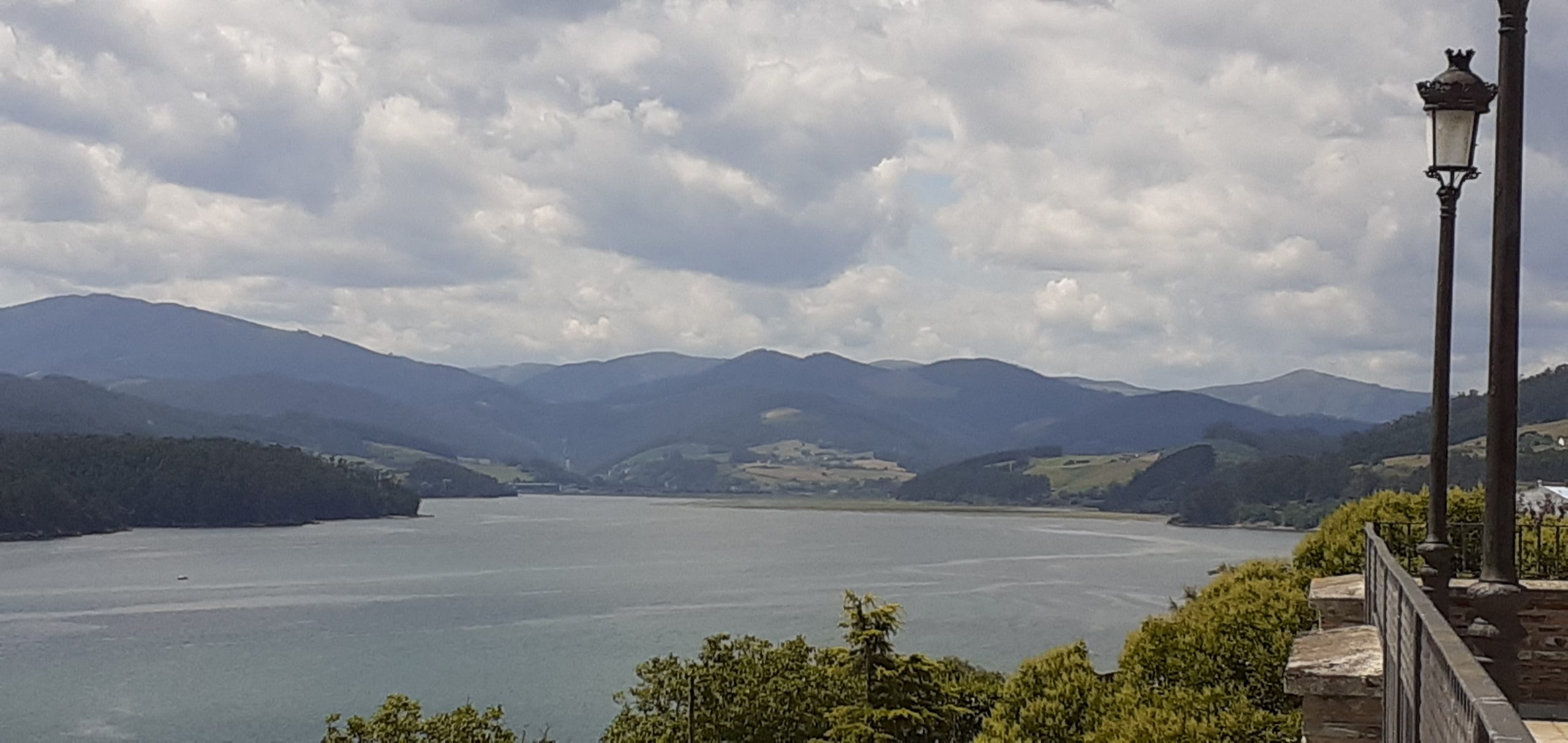
9. Atop the Parador de Ribadeo patio looking south to Vegadeo
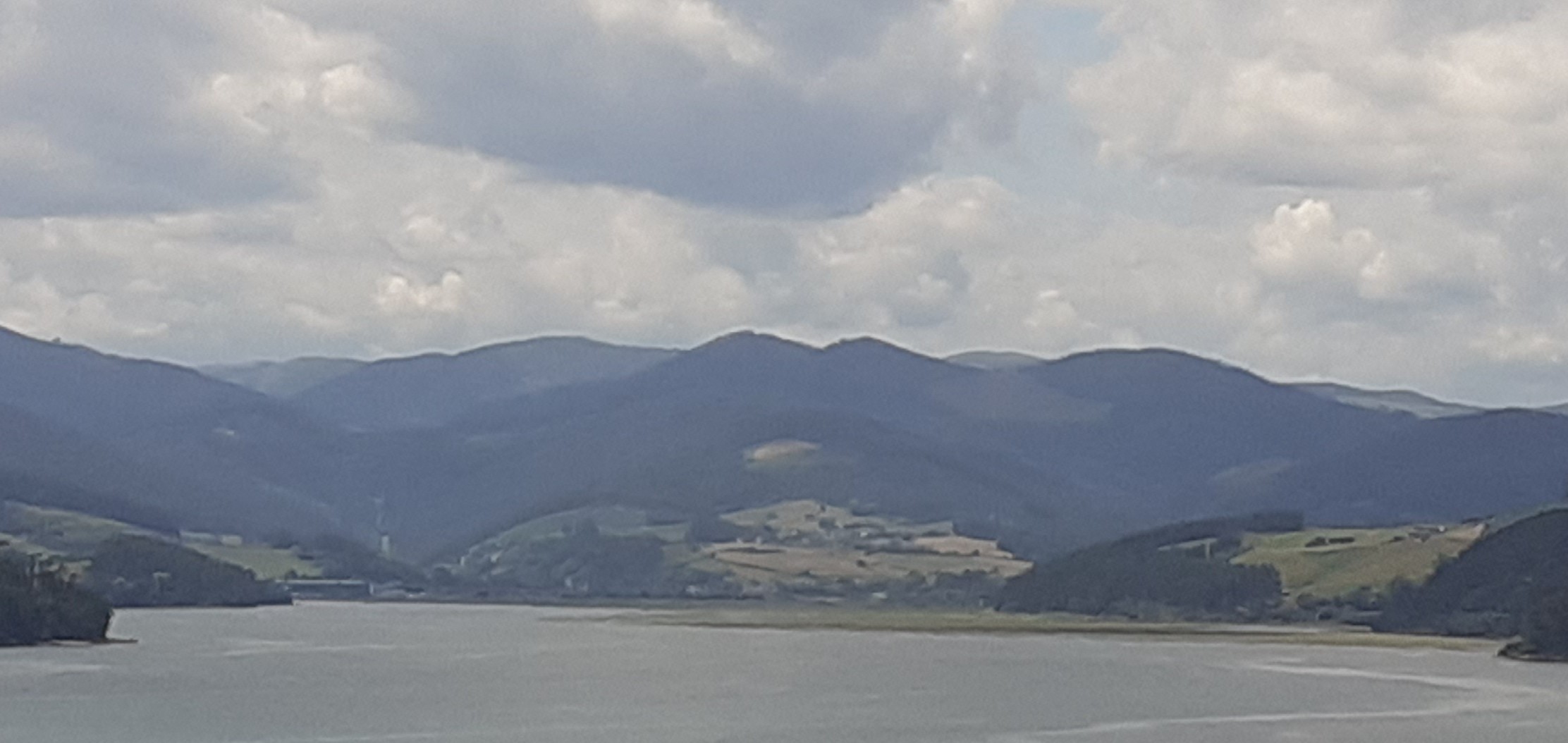
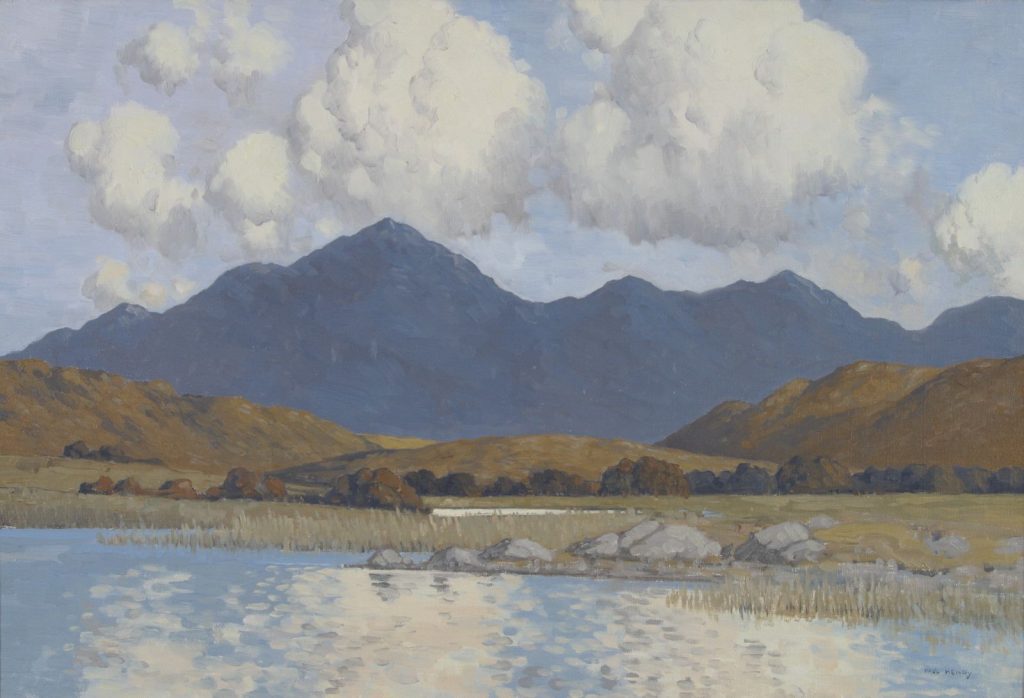
If there was any doubt about a Celtic connection between northern Spain and Ireland (people, music, landscape), zoom in to reveal a perfect Paul Henry west of Ireland Connemara painting.
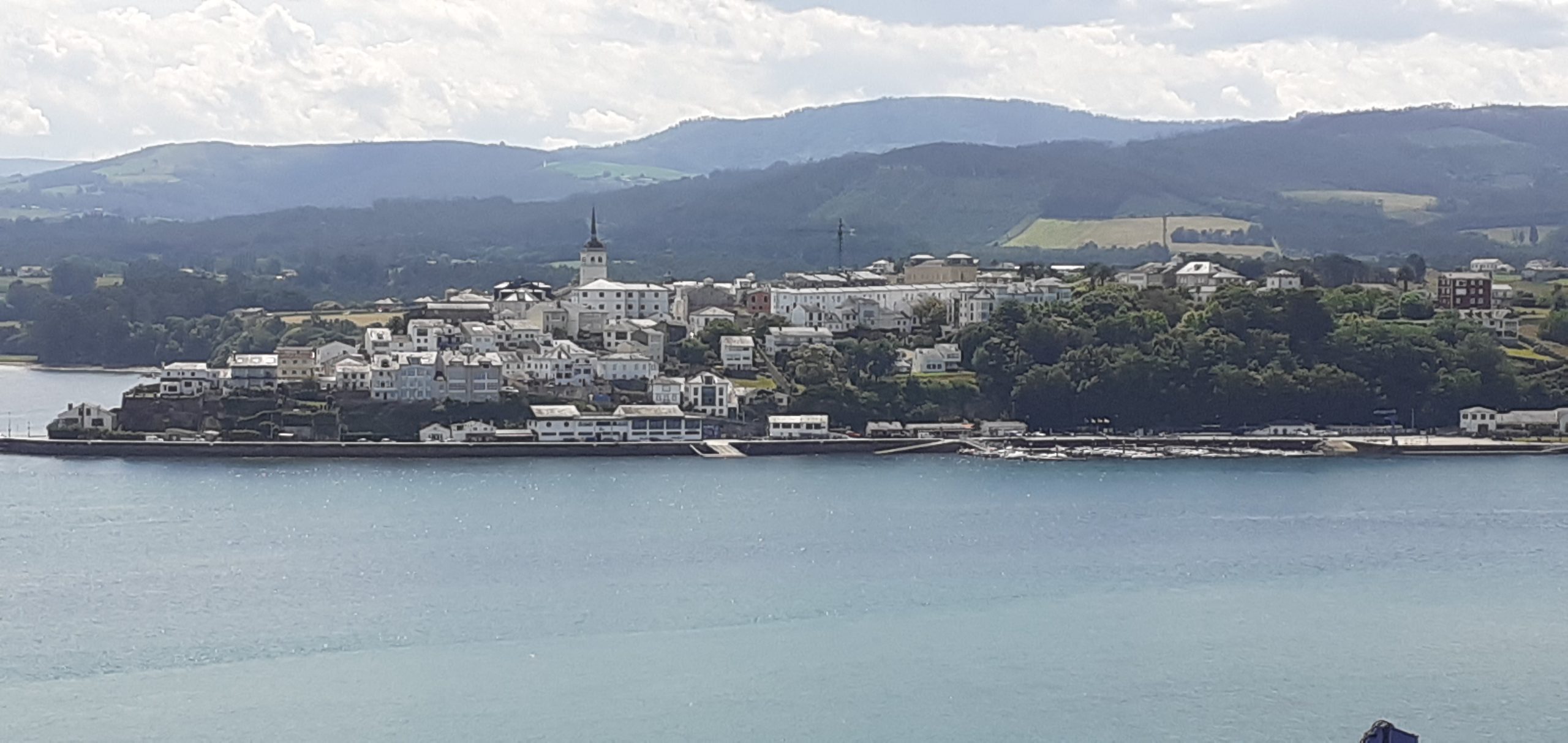
10. Atop the Parador de Ribadeo patio looking across the Eo river/estuary to Castropol
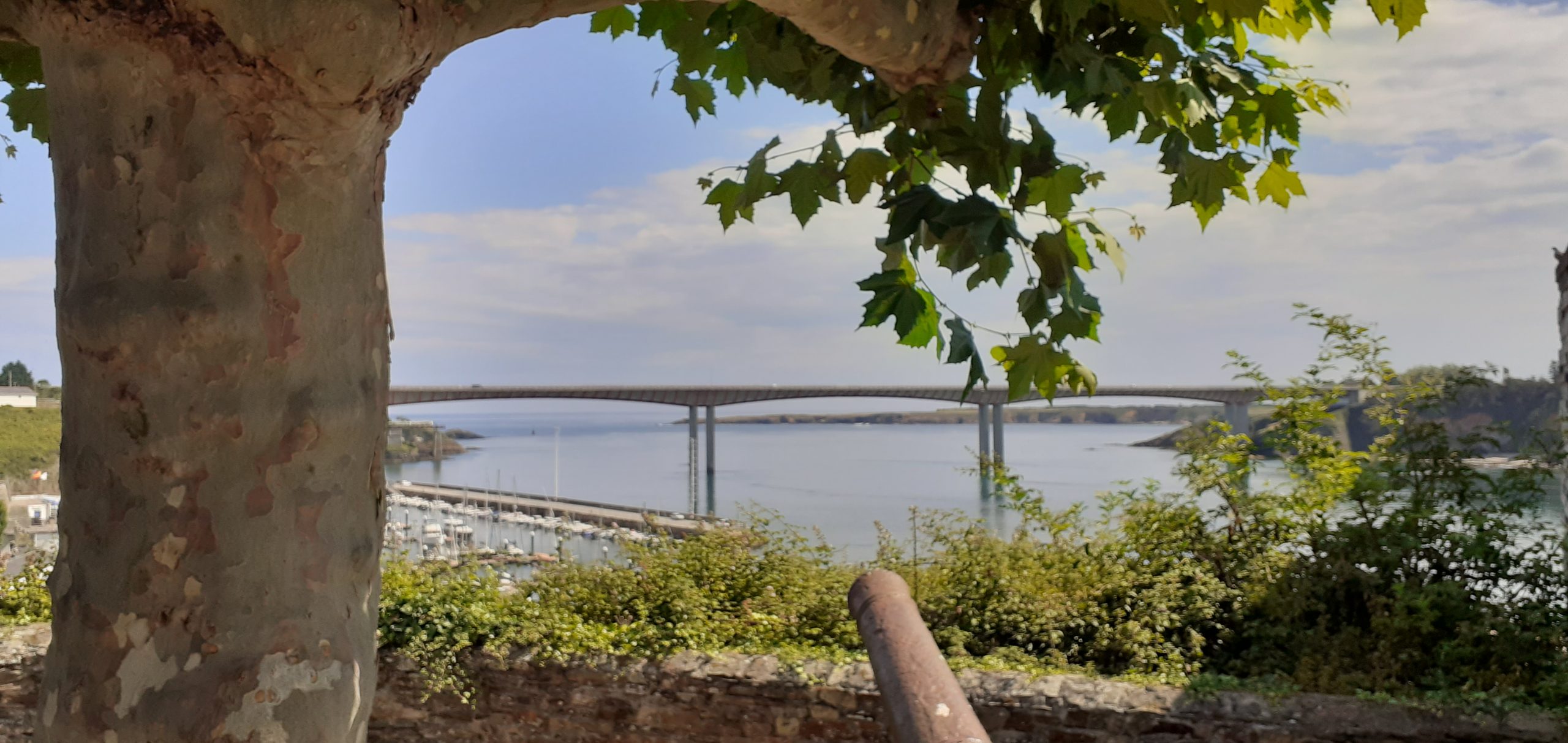
11. Atop the Mirador del Puerto in Ribadeo looking north at the A-8 autopista across the Puente de los Santos (in Asturias San Román, in Galicia San Miguel)
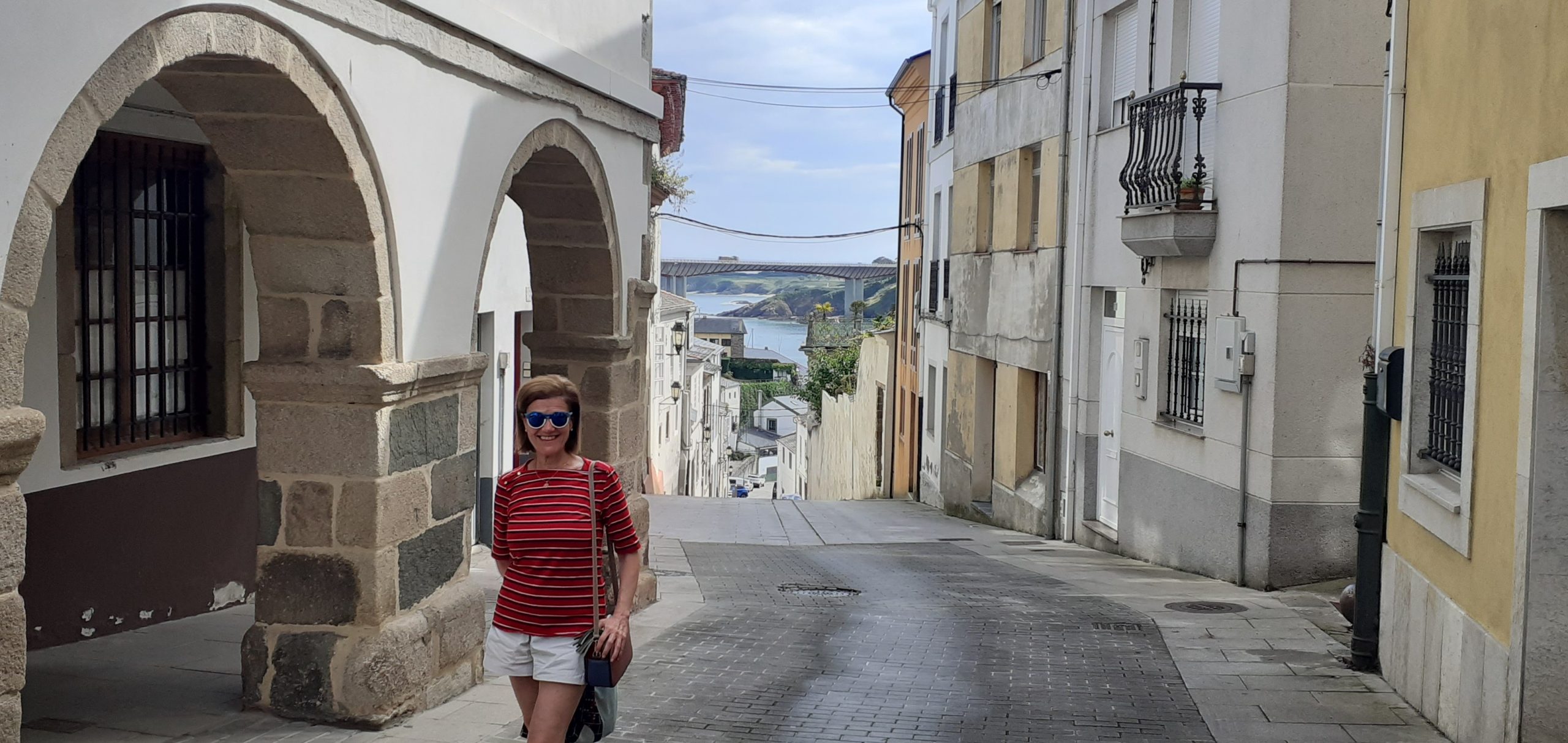
12. Belén looking north on Rúa Amando Peréz in Ribadeo
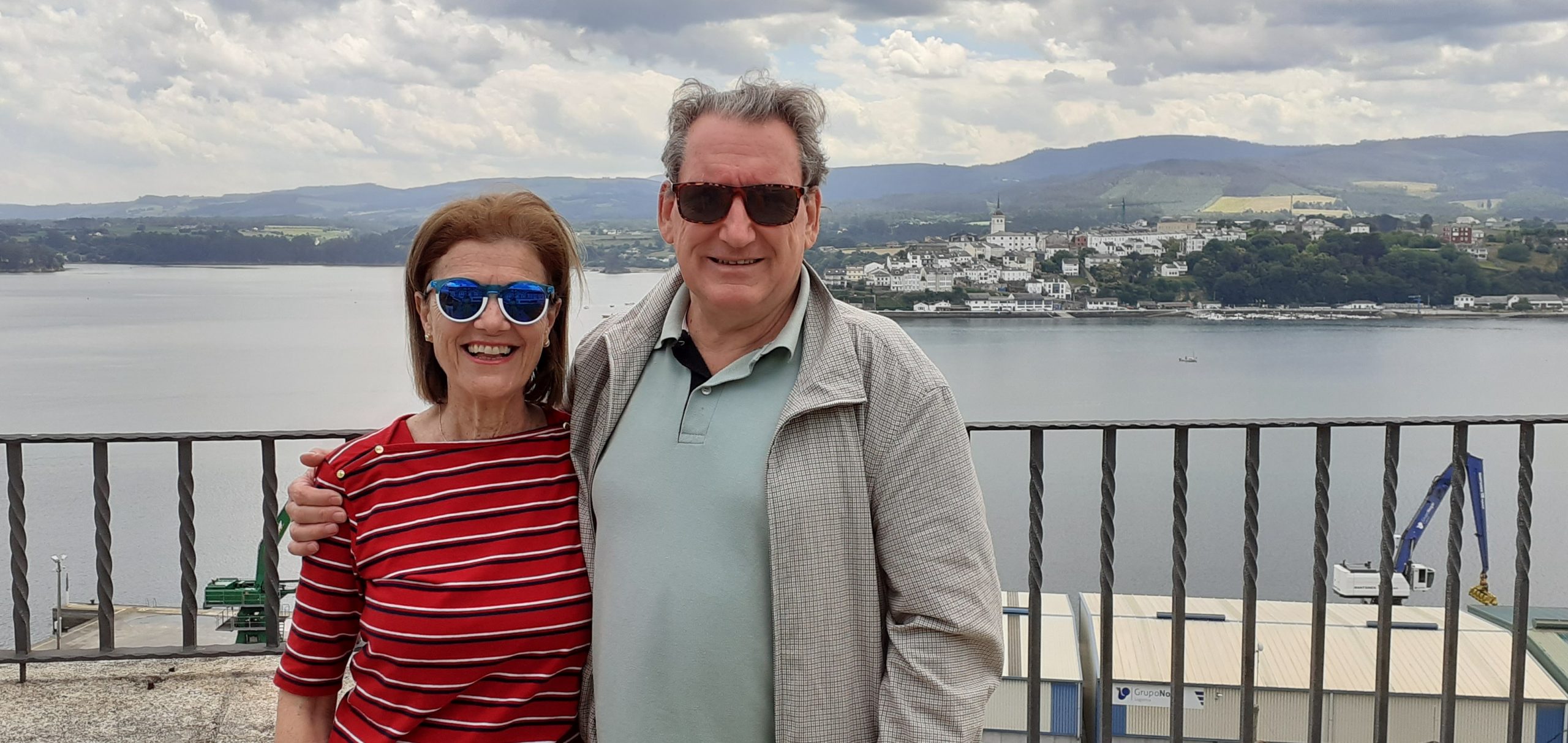
13. The two of us atop the Parador de Ribadeo patio after a lovely Yzaguirre vermouth (stirred not shaken)
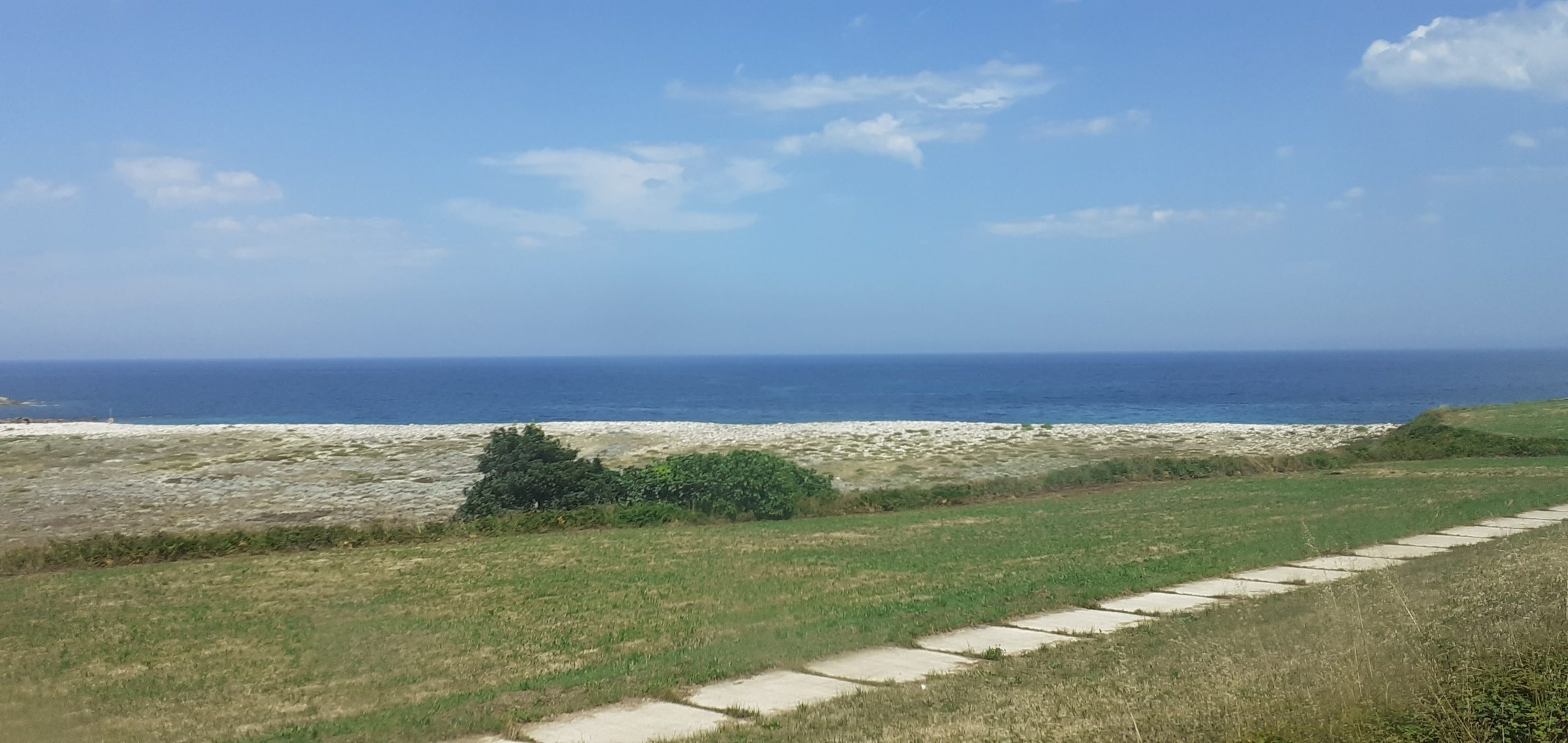
14. The coast just west of Foz. The train almost touches the water on parts of the trip.
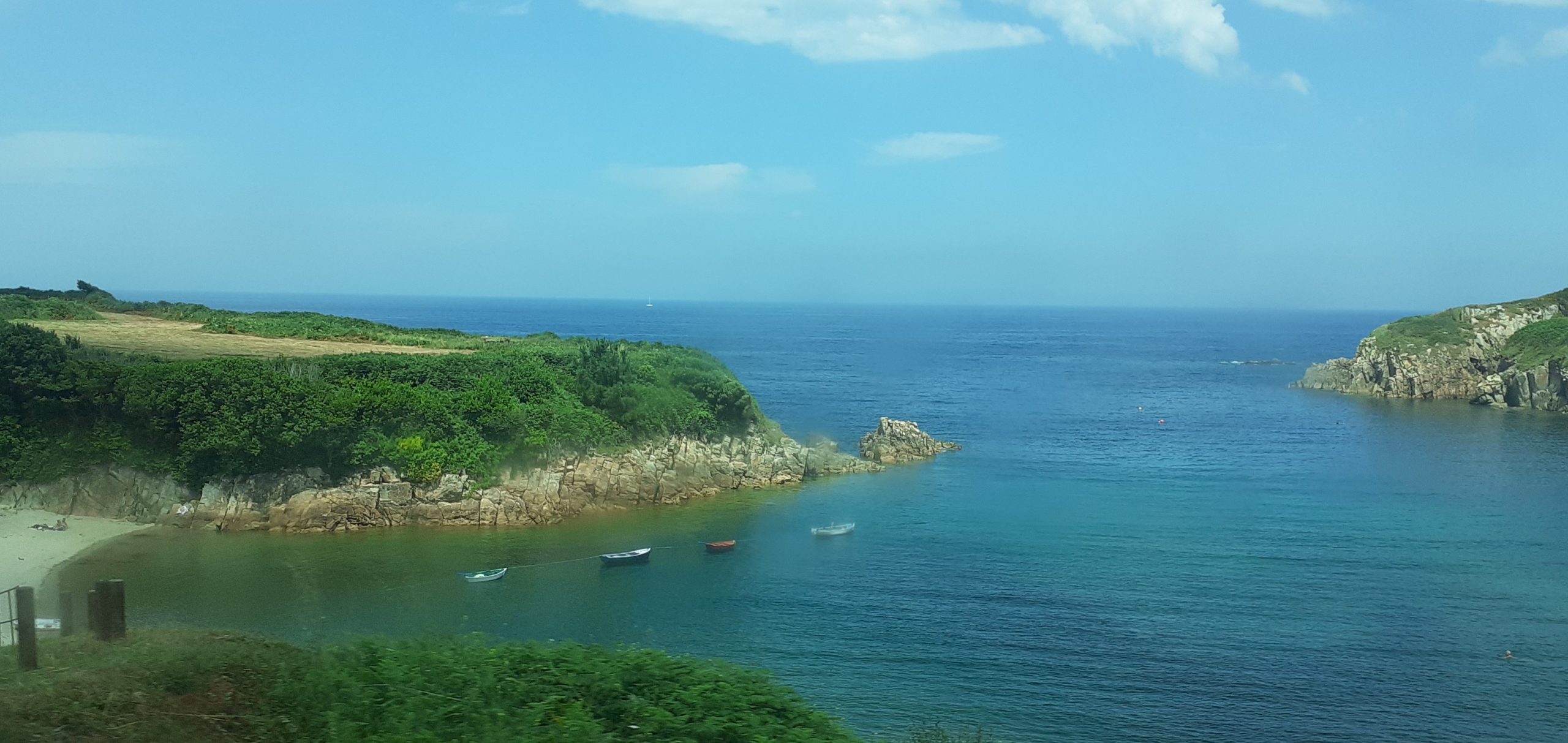
15. More coastal views just east of Burela and more exquisite contrasting colours
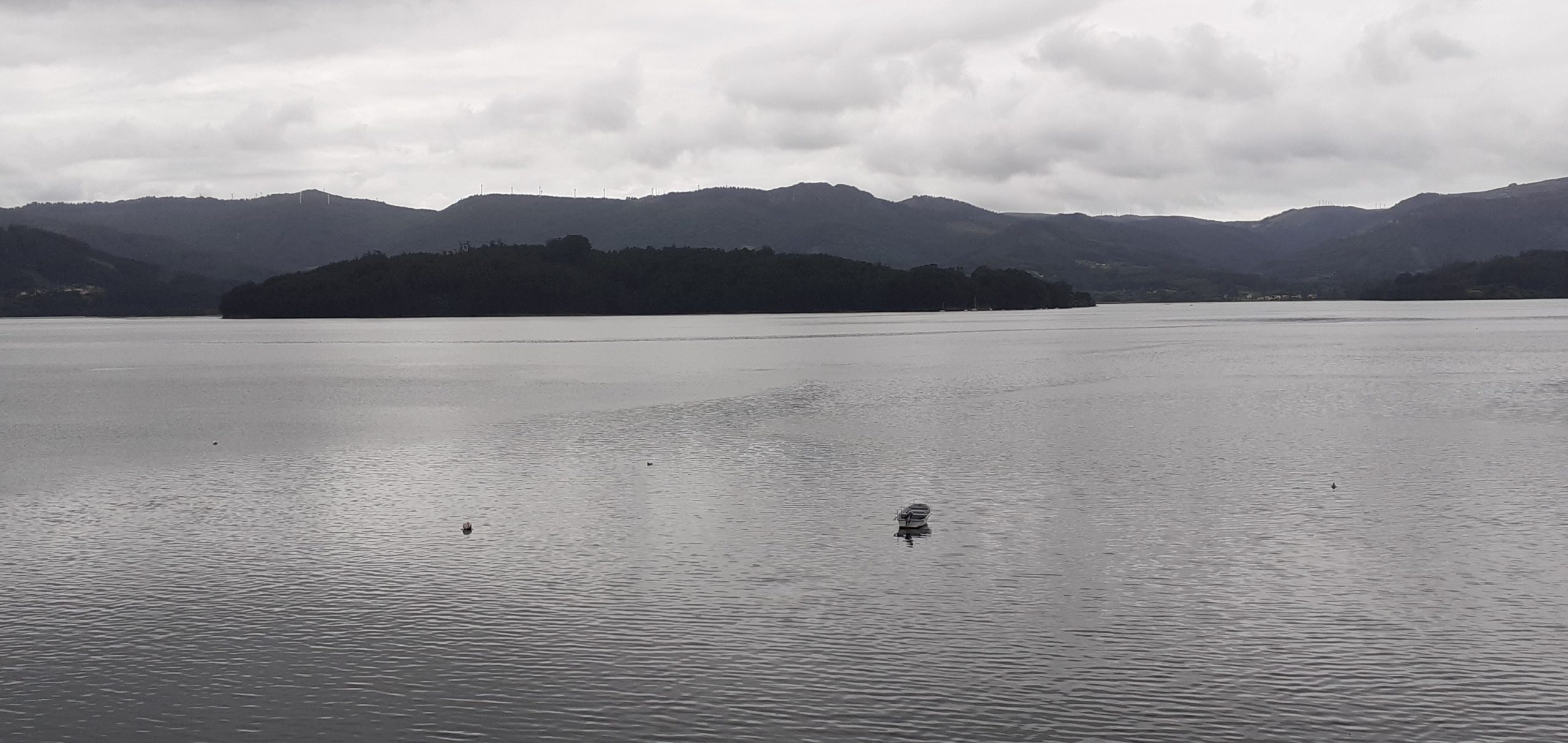
16. A lonely boat west of Burela
As one would expect, the weather changes often over 300 km of varying coastal and interior landscapes. This photo above was taken when the skies were a bit greyer on the trip home. All the other photos are on the trip out from Gijón to Ferrol.
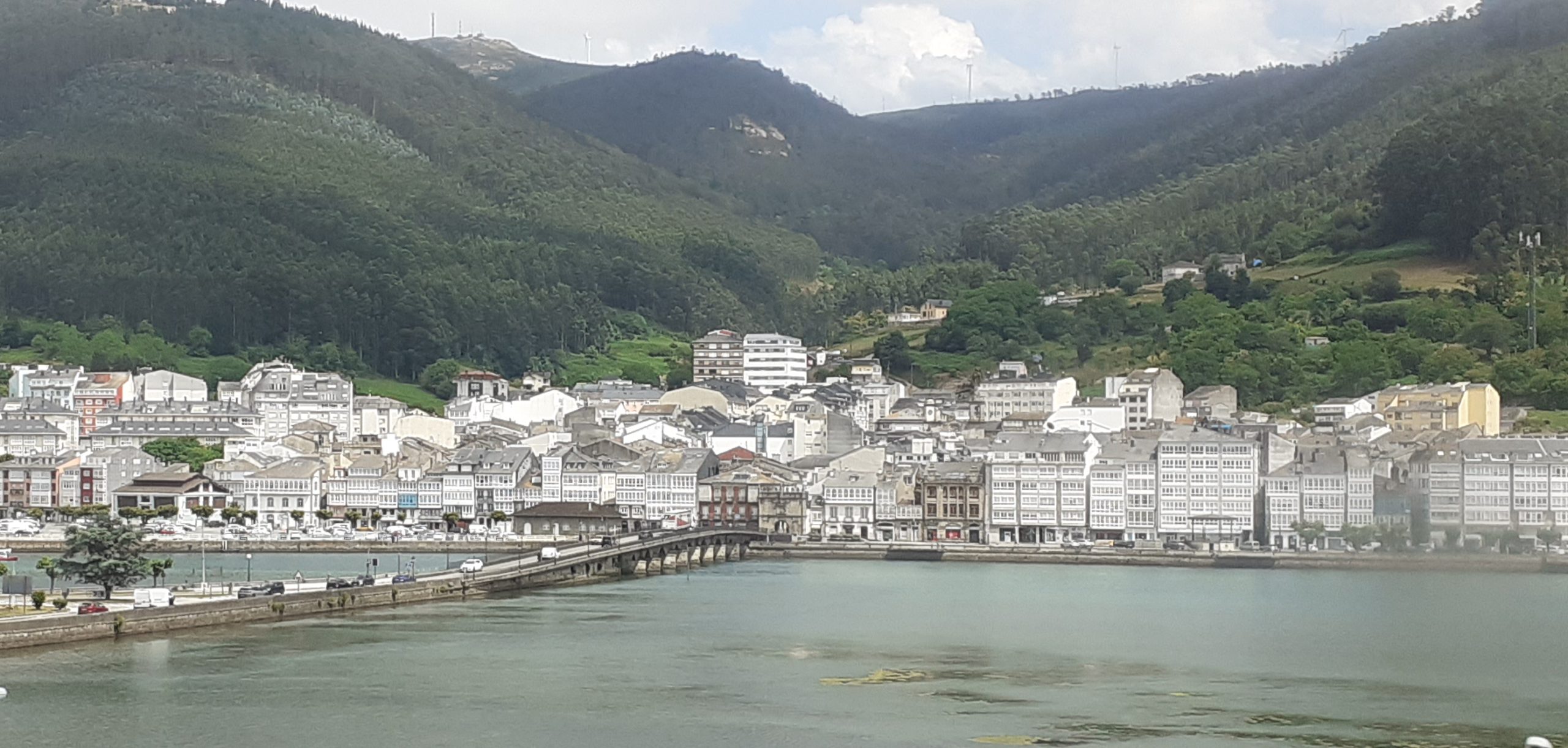
17. The town of Viveiro with stone arched bridge (Puente de la Misericordia)
with a spectacular mirador on top of the hill
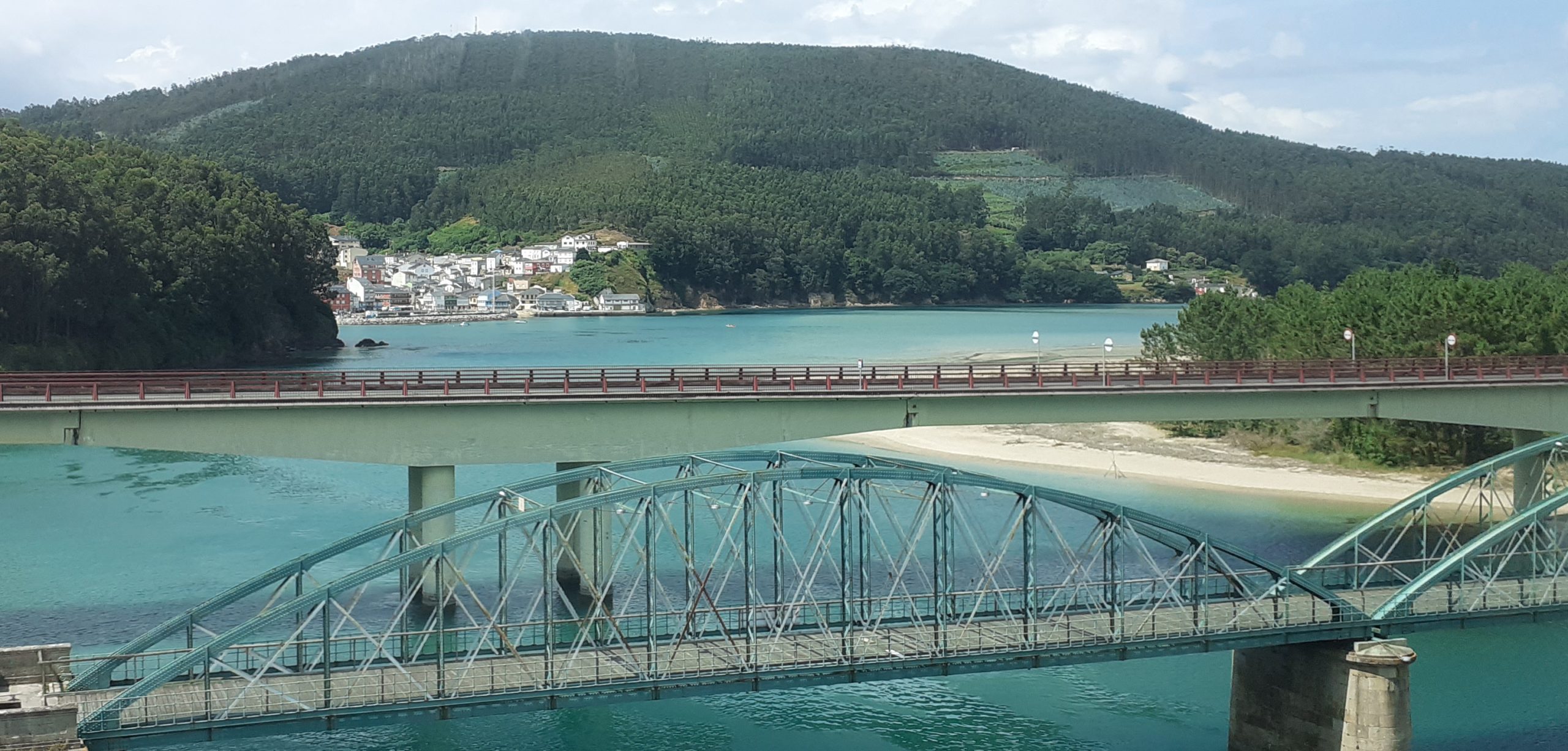
18. Two different style bridges as we approach the town of (Porto O) Barqueiro
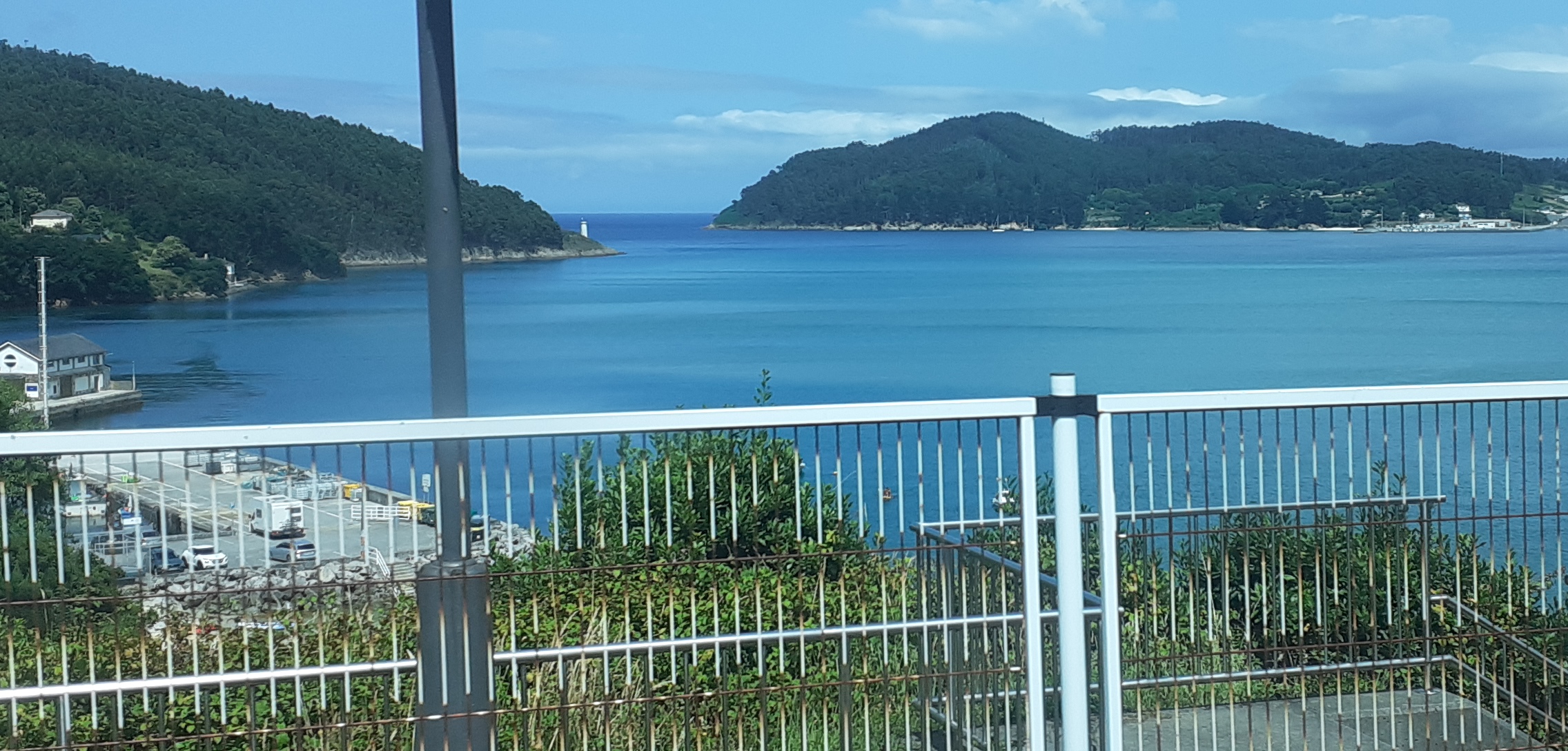
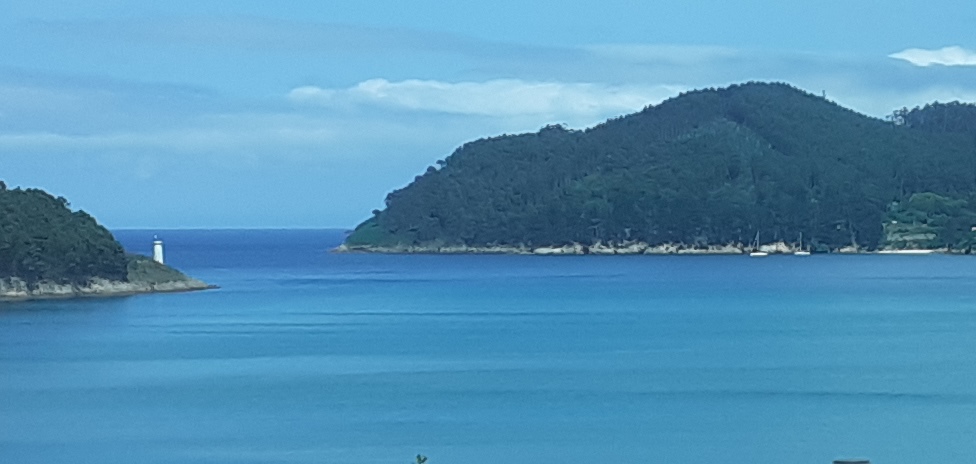
19a. Only a few photos have been cropped, but check out the difference when the photo above is cropped to focus on the lighthouse. Greece?
After a 75-minute Cercanias from Gijón to Pravia, 3-hour FEVE from Pravia to Ribadeo, overnight stopover in Ribadeo, and 3-hour FEVE from Ribadeo to Ferrol, we arrived in the harbour town of Ferrol (pop. 70,000), home to shipbuilding, a naval base, and the start of the peninsular English/Celtic Camino to Santiago de Compostela.
There are 20 official English/Celtic Camino routes in the UK and Ireland (from one day to 2 weeks long). To receive an official compostela (stamp), one must walk at least 100 km. The Ferrol-Santiago route is about 93 km (6 stages).
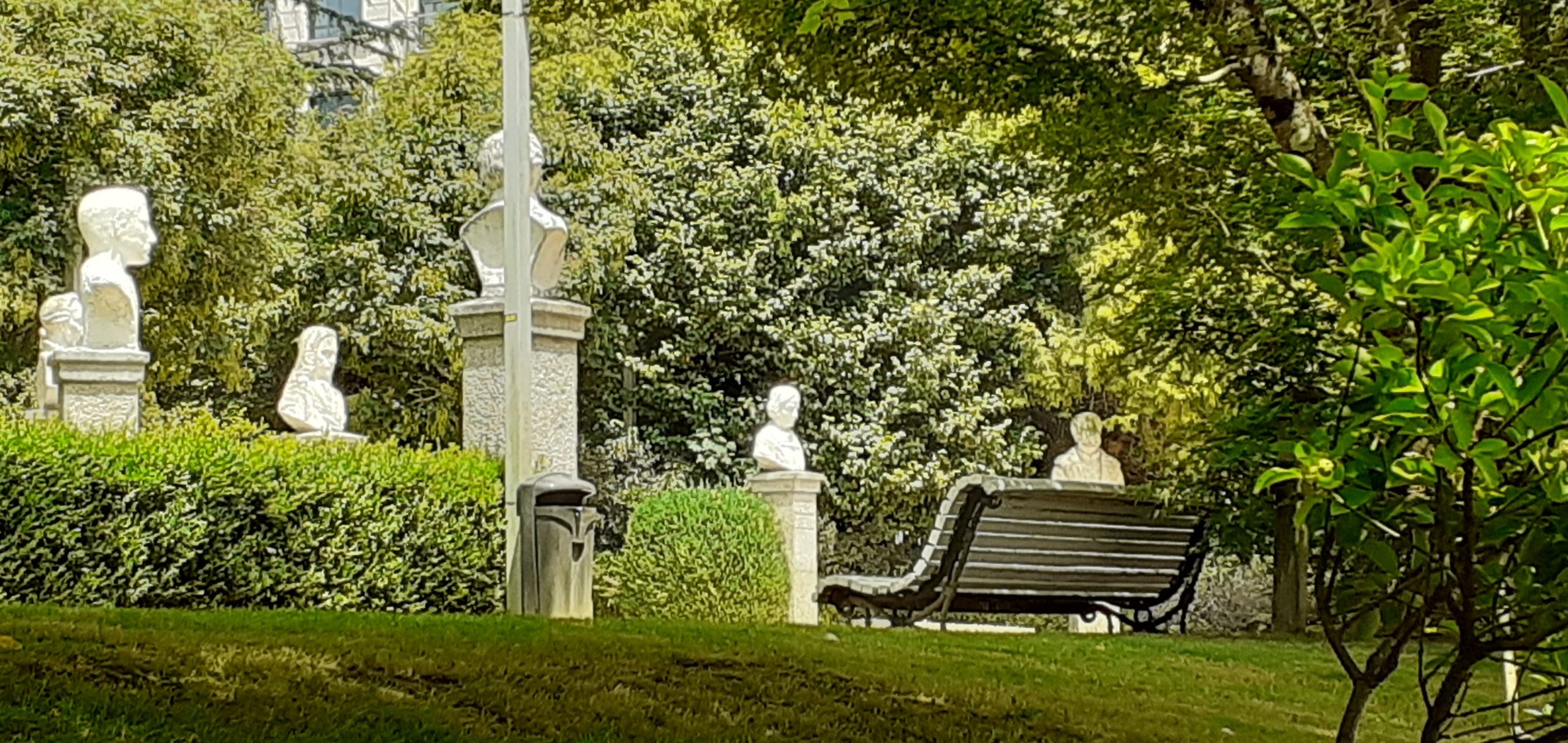
20. The Parque de la Reina Sofía on the edge of the central Magdalena neighbourhood
In 2008, artist Eduardo Hermida started a series of “interventions” in the abandoned areas of the Canido neighbourhood in central Ferrol, using Diego Velázquez’s iconic Las Meninas painting as a theme to try to mask the sadness of the ongoing economic crisis since the 1980s. Various other artists added to the urban makeover that now has over 1,000 pieces. Here are just four. Have your camera ready!
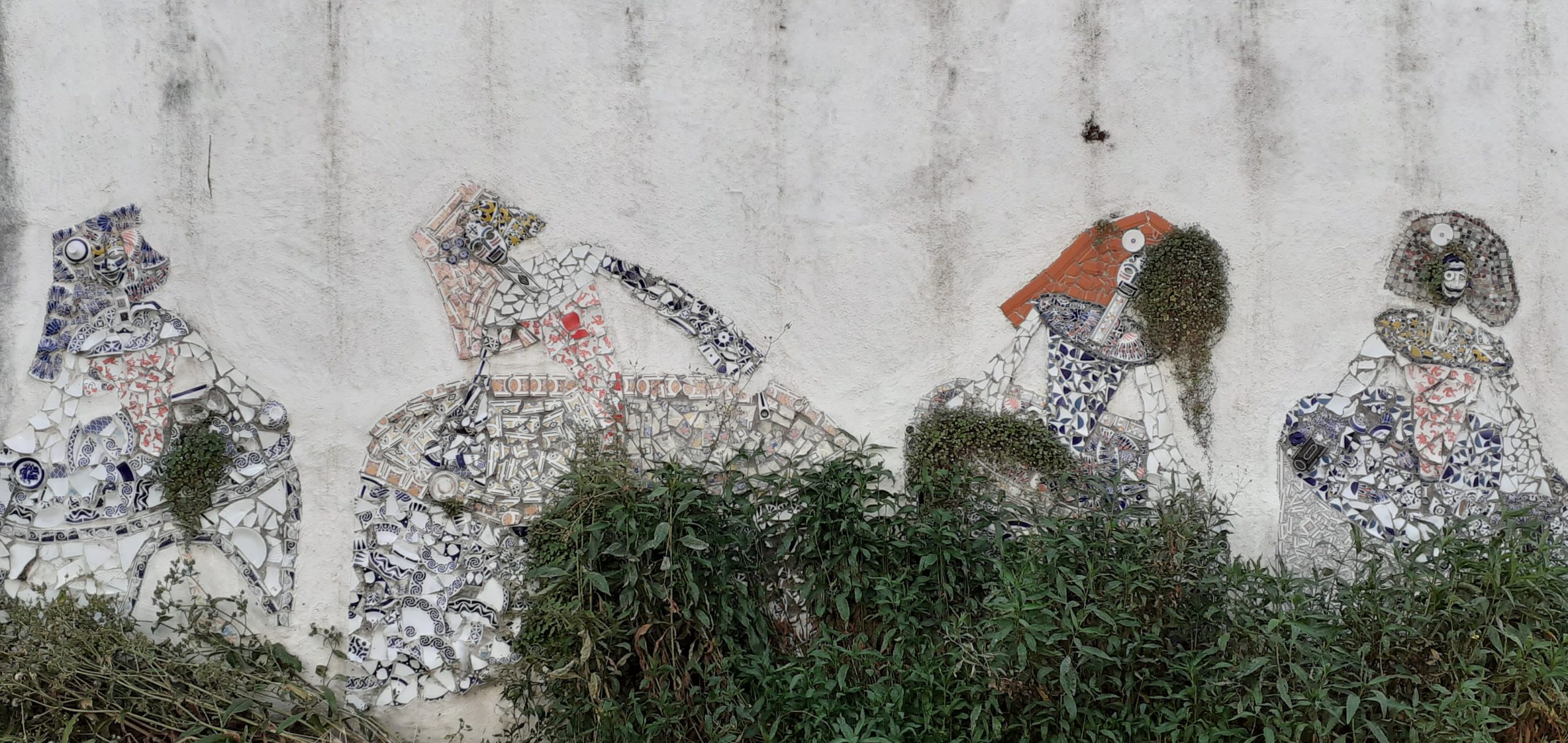
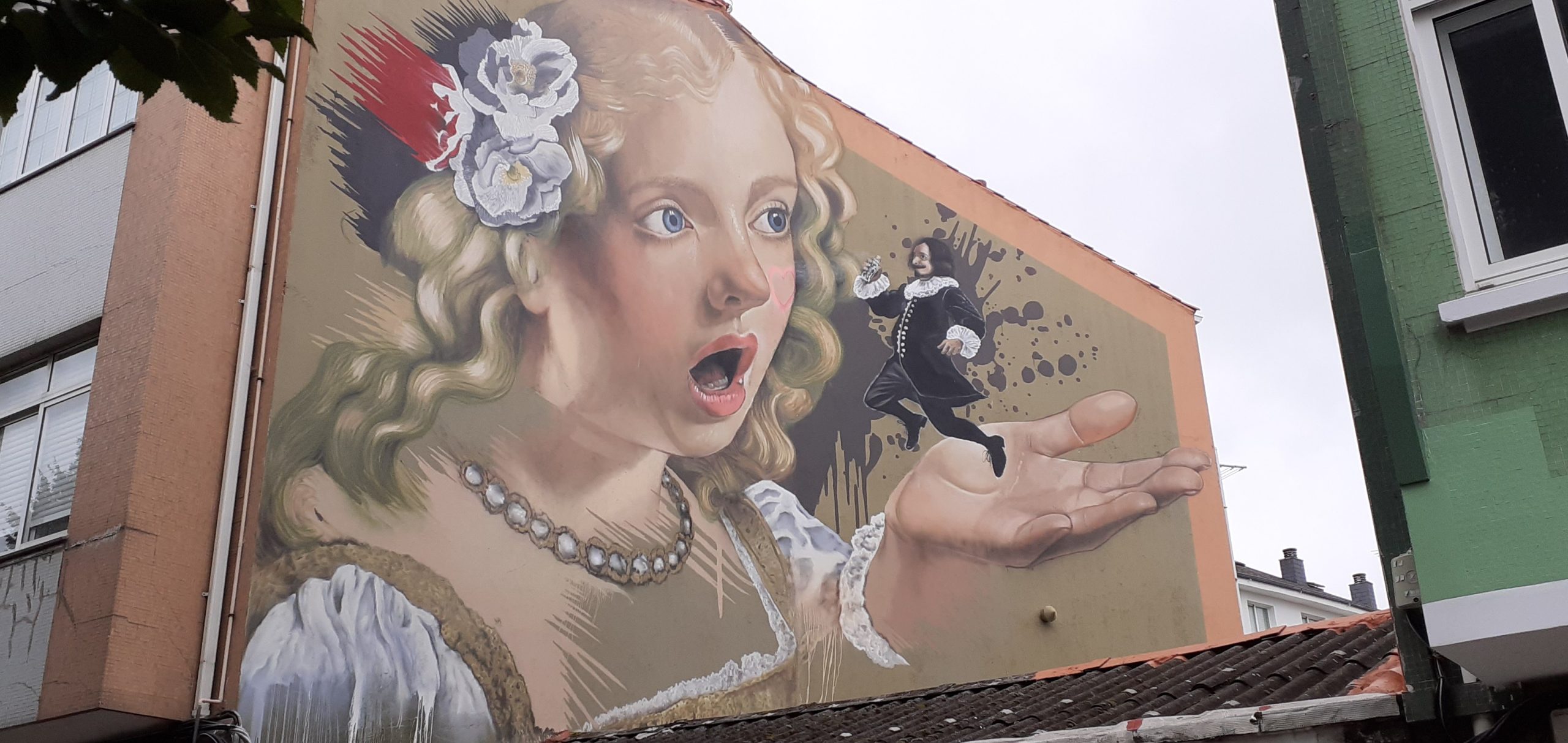
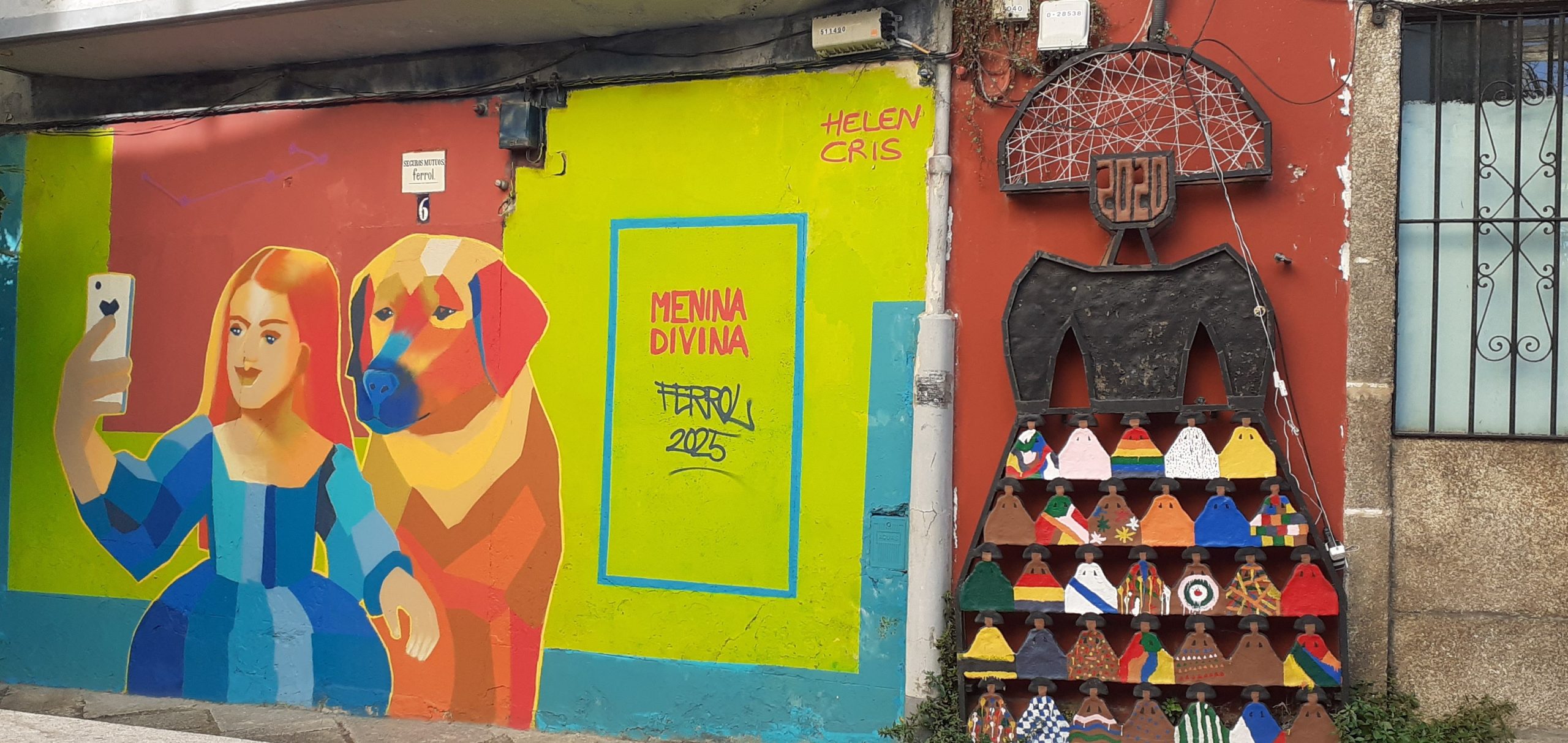
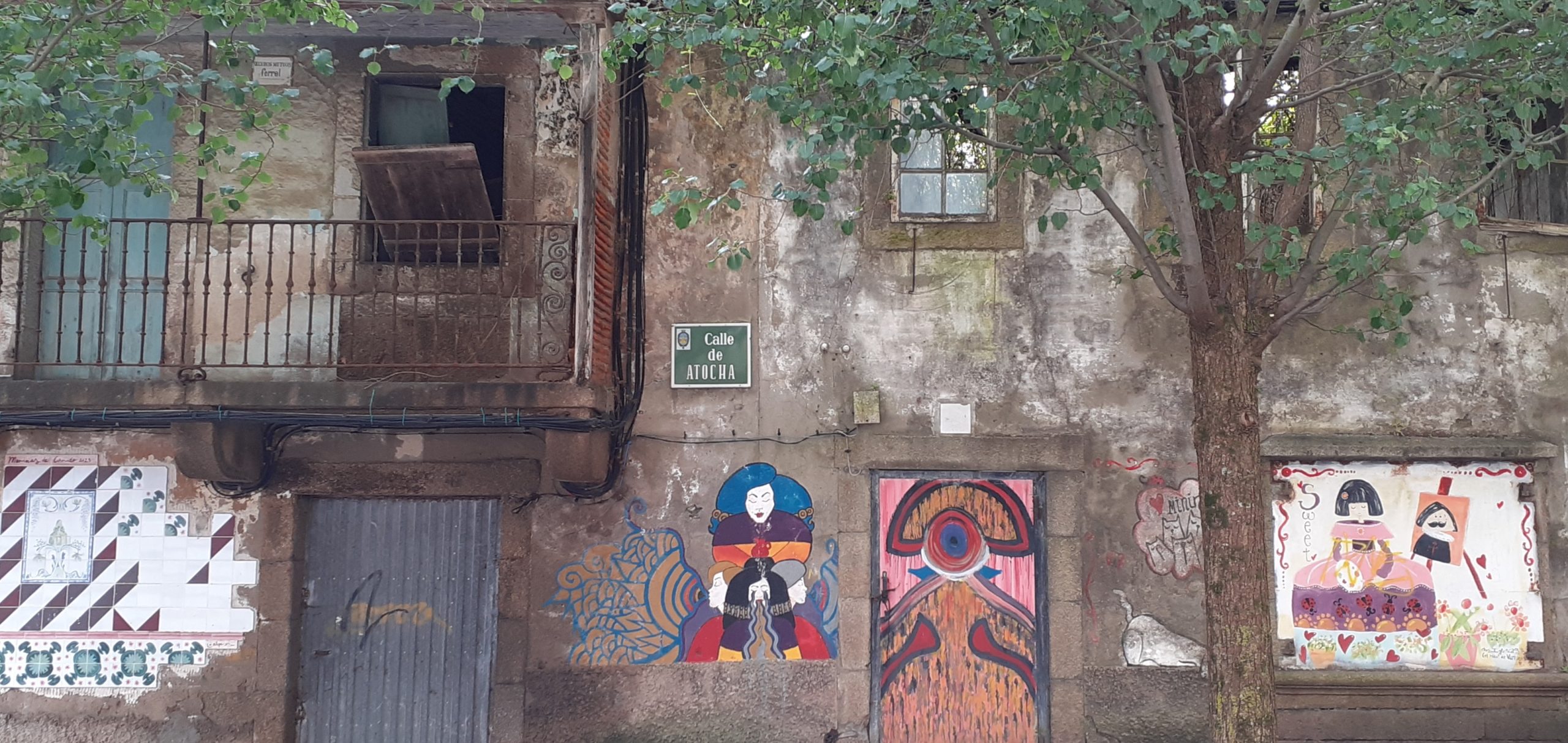
21-24. Las Meninas de Canido
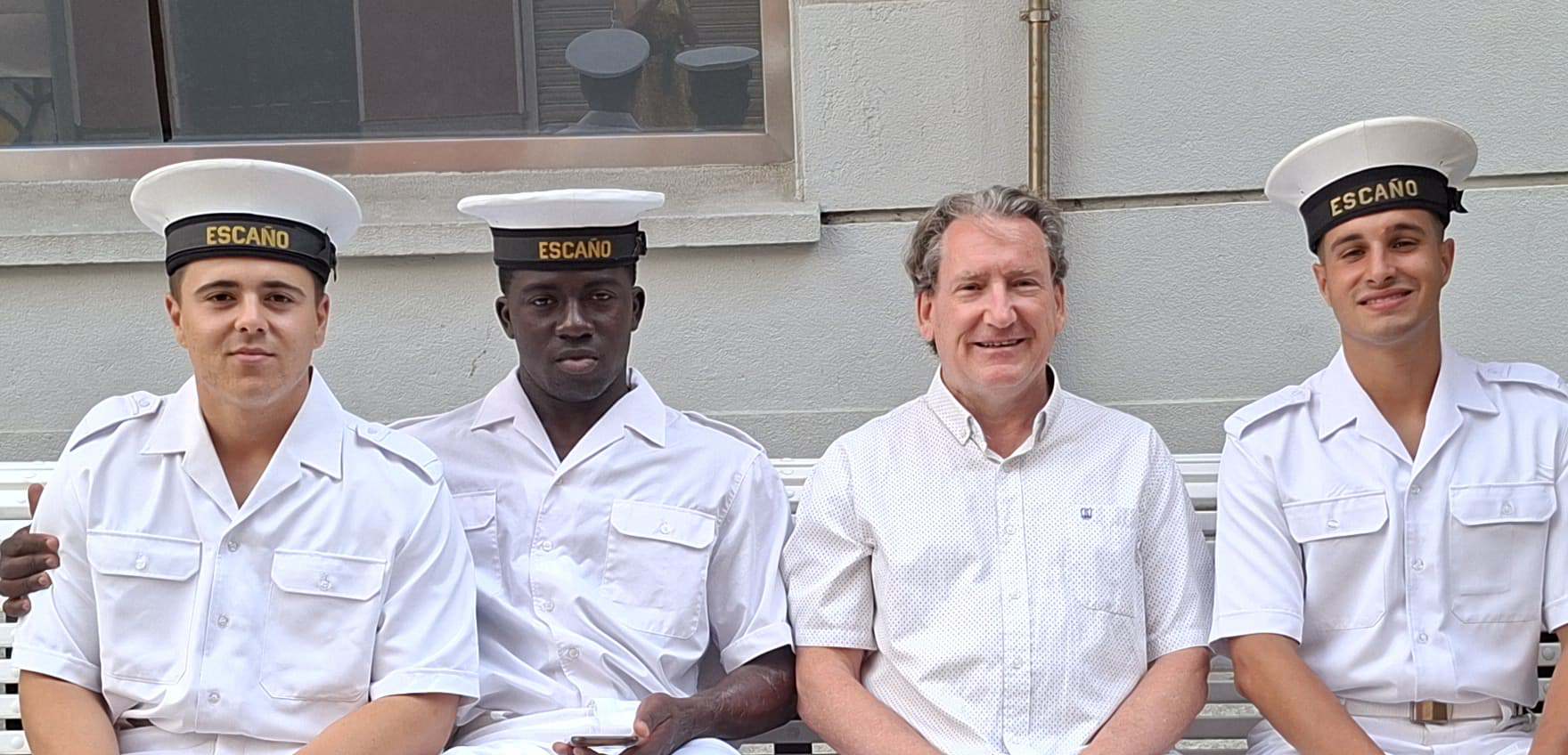
25. Johny and the Marineros
Escaño is the naval station school in Ferrol, named after Antonio de Escaño, a late 18th-century Spanish armed forces officer. The three naval candidates are on a one-year training course (hence no stripes). The other is a life-long candidate (lots of stripes). ¡Buen camino!
